
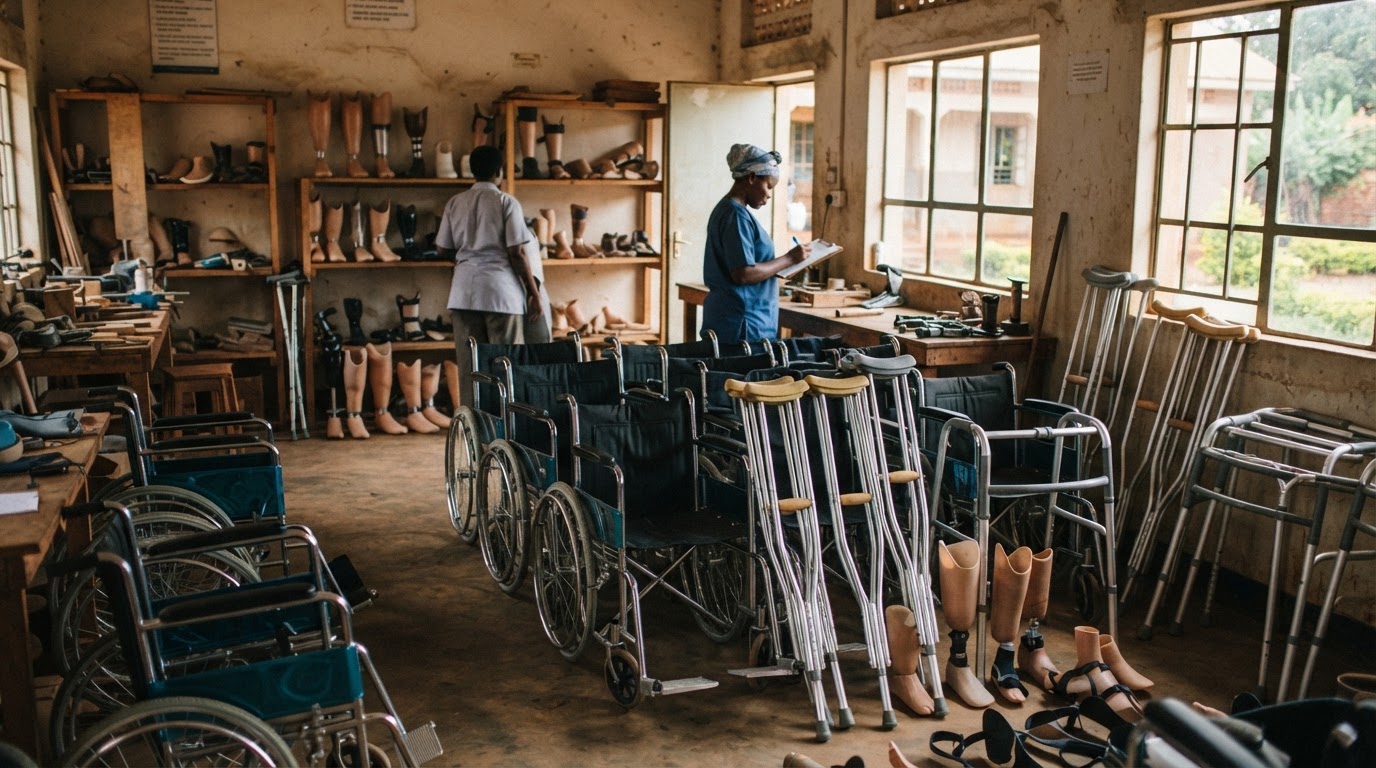
Uganda’s Ministry of Health is finalising a priority list of 50 assistive products that it plans to add to the national essential medicines and health supplies list, the Daily Monitor reported on 12 November. The list is part of ABILITY+, a 2026–2031 programme presented at a rehabilitation and assistive technology symposium in Kampala organised by the National Union of Disabled Persons of Uganda (NUDIPU). The programme aims to give free assistive devices to refugees with disabilities and to disabled people in host communities, across every refugee settlement and host district.
The same day, Nile Post (via allAfrica) reported the launch of the National Rehabilitation and Assistive Technology Strategic Plan 2026–2030 at Nakivale refugee settlement, with Humanity & Inclusion as a partner. The Ministry of Gender, Labour and Social Development said the National Special Grant will fund assessments and devices from this financial year. The plan also includes regional warehouses to store, service and repair equipment, and the ministry is working with the Ministry of Health to refurbish orthopaedic workshops at referral hospitals.
Gaps remain. No budget has been published, the Ministry of Health says it still needs support with training, assessment and monitoring, and disability groups at the symposium asked the government to waive taxes on essential assistive products. One local advocate said a pair of elbow crutches costs around Shs300,000 (about USD 80).
Deliberate perspective
An essential supplies list changes how a product is bought. It moves assistive products away from one-off donor purchases and towards planned, recurring public procurement through national supply channels. For O&P, foot health and rehabilitation vendors, four points stand out:
- The list will shape specifications: products and descriptions on Uganda’s priority list are likely to be copied into national, NGO and UN tenders. Vendors who understand the list early can align product descriptions and documentation before tenders appear.
- Price for fixed public budgets: when devices are free to the user and funded from a grant, unit cost decides volume. A clear, durable entry tier matters more than a premium range.
- Service is part of the offer: regional repair warehouses and refurbished orthopaedic workshops will need components, consumables, spare parts, tools and technician training, not just finished devices.
- Humanitarian buyers are already active: Humanity & Inclusion and UN agencies buy P&O materials and devices in the region. In August our tracker listed an H&I Uganda study on 3D digital manufacturing for P&O services.
Our Africa registration service helps O&P, foot health and rehabilitation brands get products ready for East African buyers, and our IMEA Tender Tracker follows the government, NGO and UN tenders that follow plans like this one. Schedule a call to talk through where your range fits.