
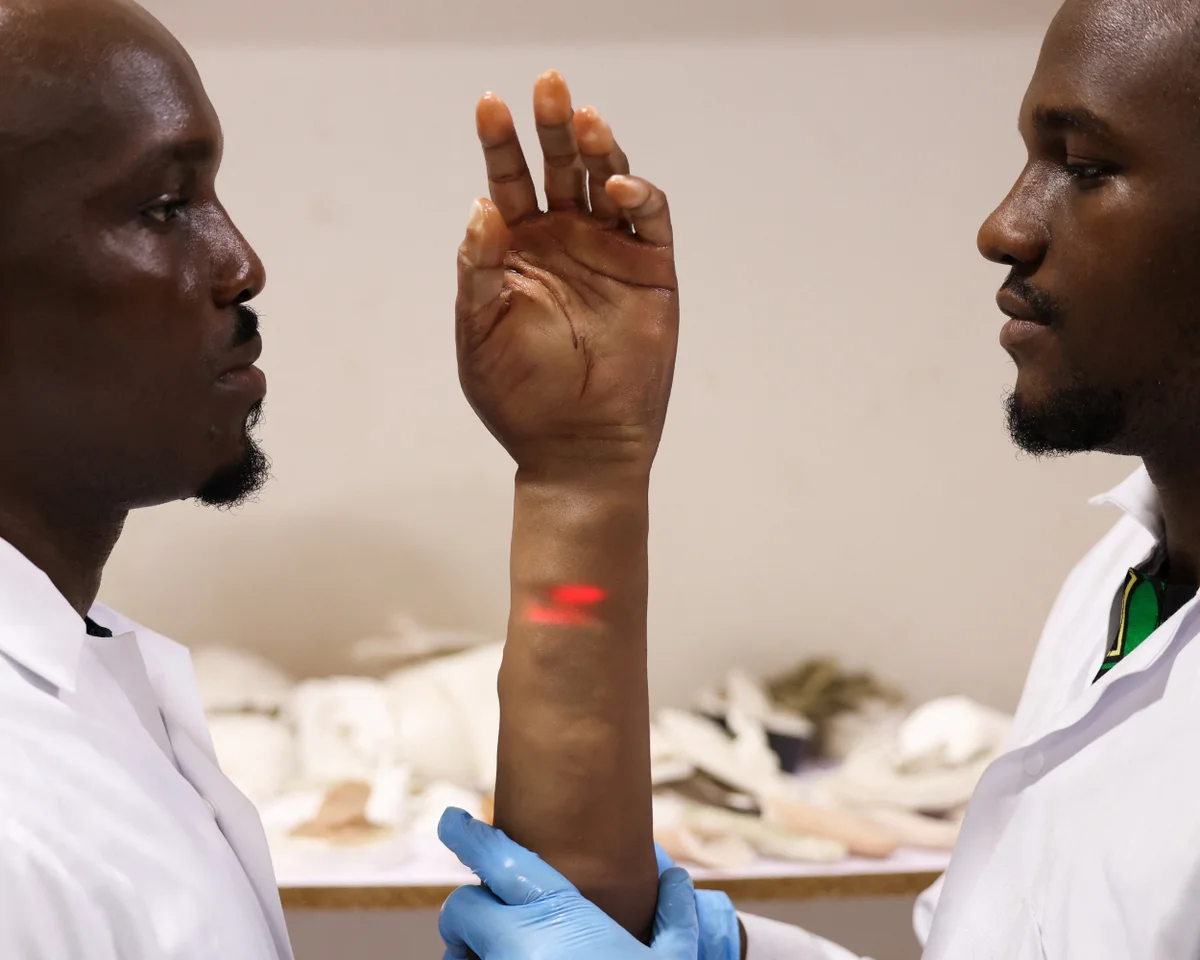
A scoping review by South Africa’s Stellenbosch University, commissioned by the Mastercard Foundation and reported by TechCabal in June 2026, mapped assistive technology across all 54 African countries. It found that at least 38 countries have adopted national assistive technology strategies since 2016, yet only 10–25% of need is being met in most countries. More than 200 million Africans need at least one assistive product, a figure the WHO expects to reach 400 million by 2050.
The review found that more than 90% of assistive products used in sub-Saharan Africa are imported, that government programmes distribute less than 15% of them, and that only four of the 42 local manufacturers it identified receive stable government subsidies, among them Ethiopia’s EPOS. East Africa (Kenya, Rwanda, Uganda and Tanzania) has the most coordinated ecosystem and 19 of those manufacturers; South Africa, Zambia and Zimbabwe follow closely.
Investment is starting to follow. Kenya’s AT4D launched a $500,000 fund for early-stage African assistive technology ventures in March, and recent research points to tariff reform under the African Continental Free Trade Area as a lever for cheaper access.
Deliberate perspective
Import dependence and unmet need are a supply opportunity, but Africa rewards vendors who plan by country and by funder rather than by continent. The practical questions are:
- Where to start: East and Southern Africa offer the strongest mix of policy, clinicians and partners
- Who pays: NGOs, donor programmes, government schemes, insurers and private patients each buy differently
- How to price: a tiered range, local assembly or component supply to local makers can open doors that finished premium devices cannot
- How to register: requirements vary widely, from established regulators such as SAHPRA in South Africa to markets with lighter rules
For market mapping, distributor search and registration across the continent, see our Africa services. To reach Africa’s prosthetists and orthotists directly, IMEA CPO reports on the profession across Africa, the Middle East and South Asia; the media kit has the details.